How does early growth respond?
Humic-acid research has examined root elongation and lateral-root formation. ChitoHumus seedling tests show that the response depends on crop, dilution and preparation.
Explore early-growth tests
ChitoHumus technology
Can a low-dose biostimulant make a worthwhile difference to your crop? Start with the formulation, then look at the evidence.
Inside the formulation
ChitoHumus is a liquid formulation developed by SIA JIKO Ent in Latvia. The manufacturer describes an extract of high-moor peat and cultivated mushroom biomass, containing humic substances, a chitin–glucan complex and amino acids.
The supplied University of Latvia report characterises one peat-and-mushroom sample and evaluates early plant responses. A biological rationale is a starting point; crop performance still needs to be measured.
| Form | Liquid concentrate, diluted with water |
|---|---|
| Source materials | High-moor peat and cultivated mushroom biomass |
| Declared compounds | Humic substances, chitin–glucan complex, amino acids |
| Declared pH | 9.0 in the supplied manufacturer manual |
Source:
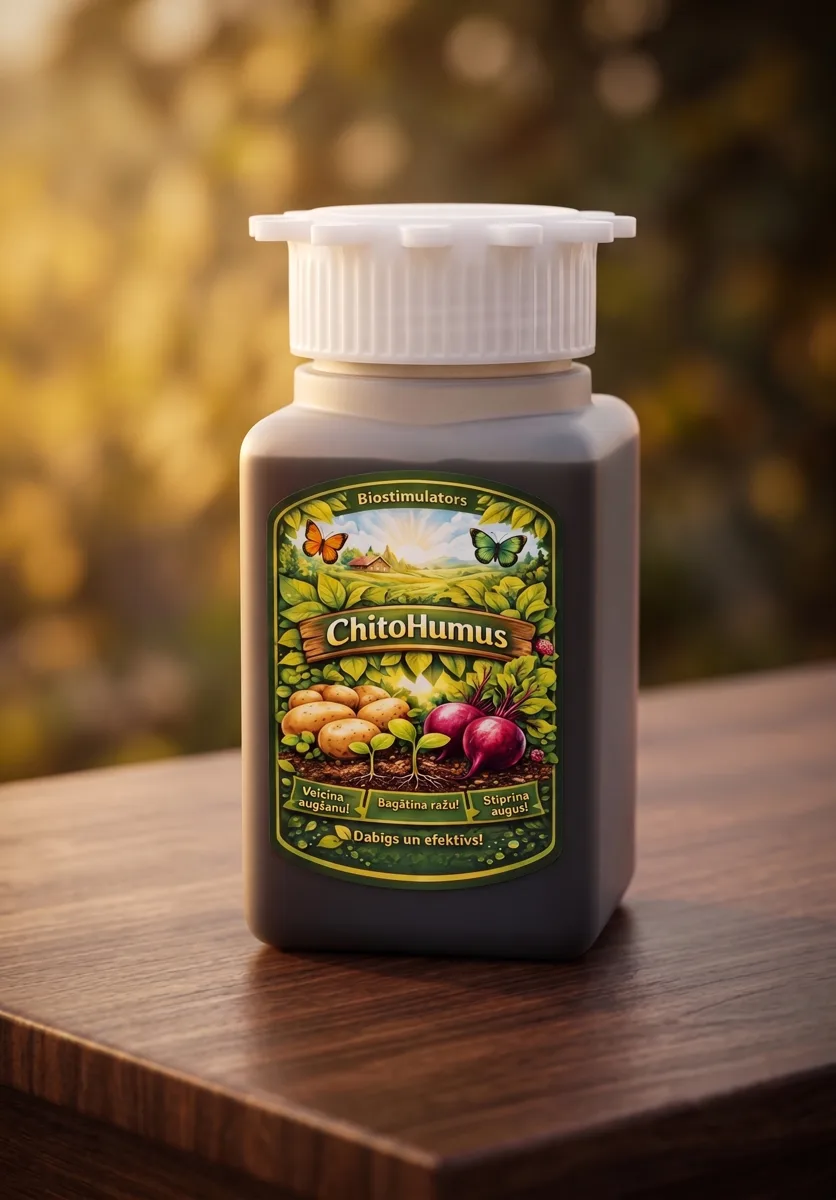 ChitoHumus · SIA JIKO Ent
Manufacturer product image; shown for product identification.
The research rationale
Published ingredient research helps frame the questions. It does not establish how every ChitoHumus application will perform.
Humic-acid research has examined root elongation and lateral-root formation. ChitoHumus seedling tests show that the response depends on crop, dilution and preparation.
Explore early-growth testsLatvian greenhouse and field trials measured biomass and harvested yield. Some comparisons were positive; the potato field report found no statistically significant yield increase.
Compare crop resultsA low dose keeps product volume small. The business case also depends on delivered price, application cost and a repeatable, saleable crop response.
Discuss your operationFrom the laboratory
The University of Latvia report includes chemical characterisation and seven-day germination tests. Positive observations in oats sit alongside inhibited pea seedlings under the tested soaking conditions.
That difference matters. A seed-soaking protocol, a greenhouse foliar treatment and a field application answer different questions.
Open the original report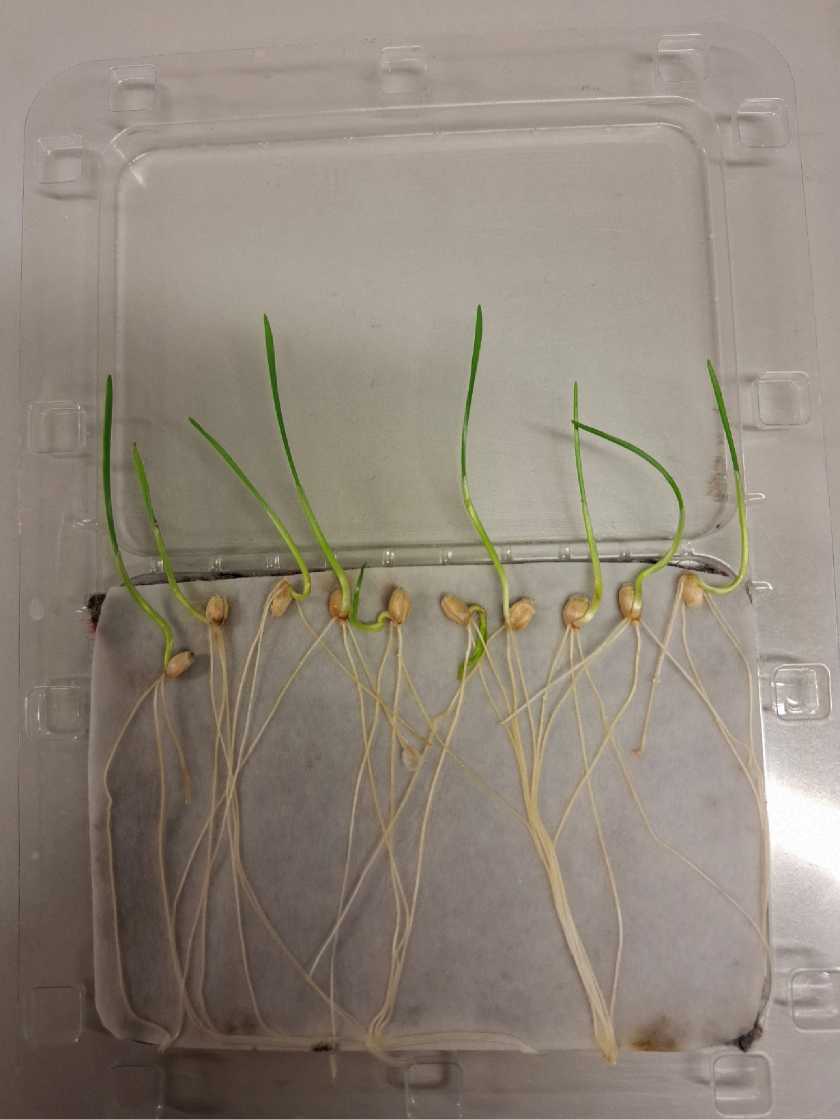
Practical questions
Latvian field and greenhouse trials tested foliar rates of 0.1 and 0.2 L/ha, with repeated applications. The manufacturer’s manual lists crop-specific methods. These are research and manufacturer references, not a Canadian application recommendation.
The available evidence does not support a general fertilizer-replacement claim. In the 2025 potato study, treatments without basal mineral fertilizer yielded less. An evaluation should keep your agronomist involved and use an appropriate comparison.
A confirmed Canadian delivered price is needed before calculating cost per hectare. Include the planned dose, number of applications, labour and machinery cost. Contact Nano Import for a quotation and a crop-specific discussion.
Contact Nano Import to confirm Canadian availability, the applicable registration or exemption documentation, and the requirements for any proposed research use. The documents provided here do not establish Canadian authorization.
Product origin alone does not establish eligibility for Canadian certified organic production. Ask for formulation and process documentation and check with your certifier. Compatibility with a particular tank mix also needs product-specific confirmation.
Agree on the crop, treatment, untreated comparison and replication before starting. Record the soil or growing medium, nutrition, weather, dose and timing. Measure saleable yield, crop quality and cost together. Confirm any required research authorization before arranging application.